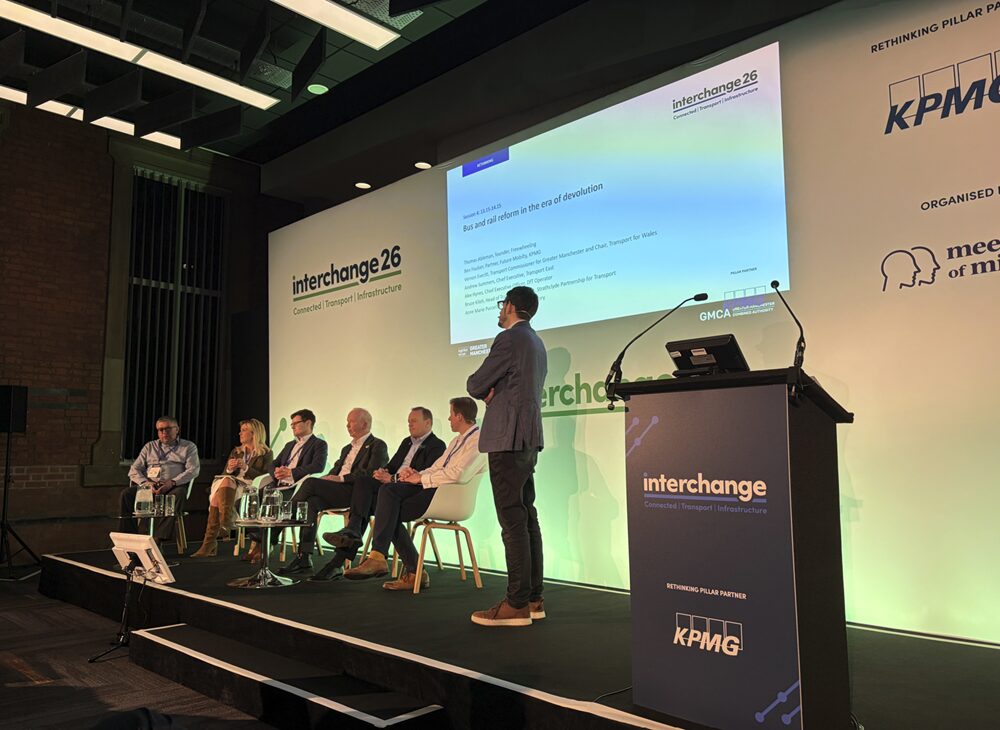
Interchange 26 in Manchester gave a useful picture of what is really on the mind of transport leaders right now. The discussion was less about reform headlines and more about what it will actually take to make bus and rail work better for customers and communities.
One of the clearest themes was local decision-making. Vernon Everitt, Transport Commissioner for Greater Manchester and Chair of Transport for Wales, spoke strongly about decisions being made closer to the customer. That linked closely to the wider push for devolution and place-based leadership. The direction of travel feels clear: transport cannot be run well from a distance if it is meant to serve local needs.
Alex Hynes, CEO of DfT Operator, brought a similarly practical tone to the discussion around rail reform. One of the strongest points to come through was that stop-start delivery does not work. If the sector wants better outcomes, it needs a long-term plan and a more strategic approach. That feels especially important in bus and rail, where confidence, investment and service quality all depend on consistency over time.
Another strong message was that structure on its own will not solve the problem. The industry can become too focused on structure when what really matters is behaviour. New organisations and new models only make a difference if they lead to better decisions, better collaboration and better service.
That is where Great British Railways came into the conversation. There was support for the idea that GBR should help bring the system together and work with devolved authorities, but there were also valid questions about accountability and who really decides outcomes. The debate seems to be moving beyond whether reform is needed and towards whether it will genuinely make the system simpler, more responsive and more customer-focused.
Customer focus was one of the strongest threads across the event. Whether it was Vernon Everitt, Alex Hynes or others in the room, the underlying message was similar: the real test of reform is not how neat it looks on paper, but whether it improves the experience for the passenger. Customers do not feel governance models — they feel delays, cancellations, complexity and poor connections.
There was also realism about the challenge ahead. Service may be improving in places, but capability gaps remain. Planning quality, leadership capability and delivery discipline will all matter if the sector is serious about turning reform into better day-to-day performance.
My biggest takeaway from Interchange 26 was this: the future of bus and rail will not be shaped by structure alone. It will depend on long-term thinking, local decision-making, stronger accountability and a much sharper focus on customer outcomes.
That is where the real work now lies.
Written by Chetan Shrouti (MD -Transport)